

You don't find company culture in polished PowerPoint slides—you find it at the coffee machine.




A fancy office, slick PowerPoint presentations, or a tight project plan. They’re nice to have, but they don’t tell you much about an organization’s true culture. Because culture isn’t found in carefully staged rituals; it only really shows itself when no one is looking. It’s in that one glance between colleagues, in who speaks up and who stays silent, and in the unwritten rules that never make it onto a sticky note.
Exactly. That’s where my work begins. And no, that’s not just soft talk. An analysis by Great Place to Work shows that tech companies with a strong culture achieve an average of 40% more revenue growth in a single year. And perhaps even more impressively, 95% of employees there say they work in a "great" work environment.
Want another example? Organizations with a weak culture have a staff turnover rate of a staggering 48.4%. At companies with a strong culture, that’s only 13.9% per year. It goes to show that investing in culture pays for itself many times over. In hard numbers and in engaged people. Source: Global Culture Survey 2021: PwC
About the author:
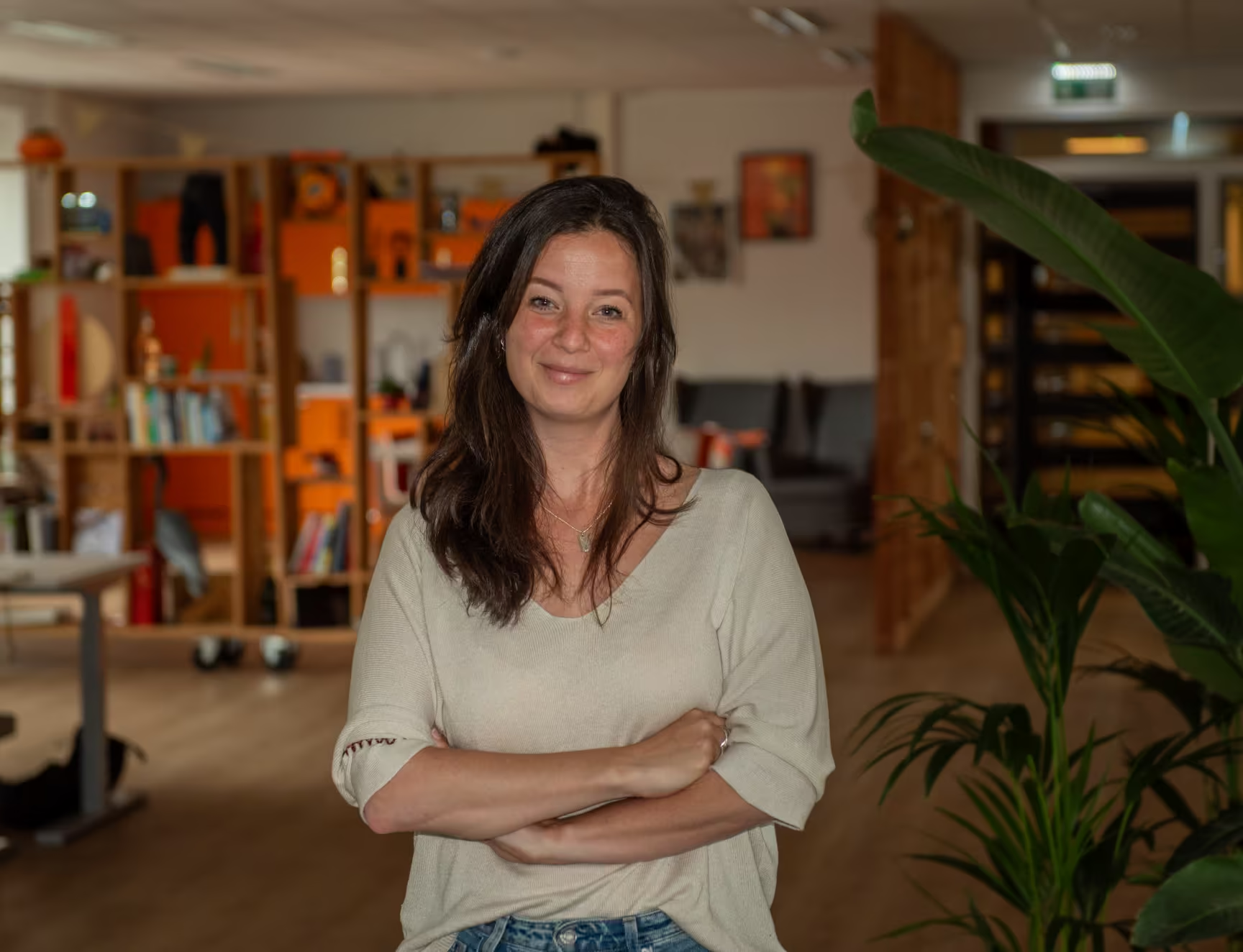
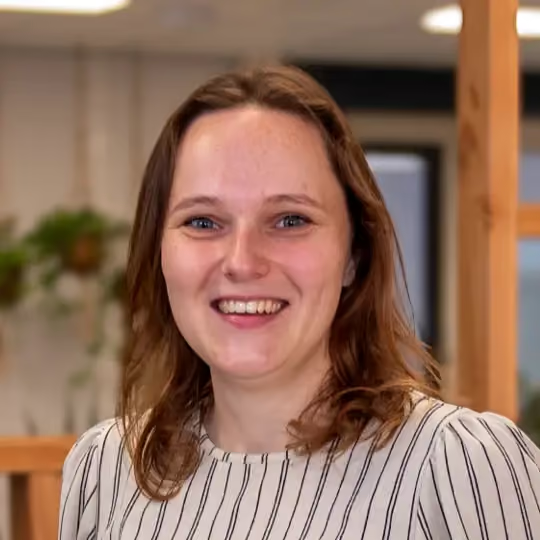
Hi, I’m Franka Juta, a Change Consultant at TeamValue. Every day, I work with organizations that are on the move. Where teams need to adapt to new goals, different ways of working, or a changing landscape. My background as a Cultural Anthropologist helps me recognize the undercurrent: the invisible patterns that drive behavior and make or break change.
During my studies, I learned to question the obvious and understand the unfamiliar. In practice, organizational culture often proves more stubborn than theory suggests. That look during a meeting, the discomfort beneath the surface, work agreements that just don't stick. That’s where my work begins. Because without insight into the underlying beliefs, any change remains superficial.
The ‘Change Starts with Culture’ series
Organizational change is often about processes, structures, and tools. But anyone involved in transformation knows: the undercurrent determines whether it succeeds. That’s why I started this series: ‘Change Starts with Culture.’ An exploration of what organizational culture really is, and more importantly, how I can use it in my work as a Change Consultant.
I’ll be talking to psychologists, entrepreneurs, leadership trainers, and other change agents who take a fresh look at teams, change, and resistance. Not just from models, but from experience.
Why? Because online, I mostly come across theory, but I’m missing the real stories. Stories I can actually use in practice. Experiences that are relatable and insights that help us as change agents move forward. Because in reality, resistance often turns out to be a lot tougher than the "5 steps to change" in your favorite management book.
Who is this series for?
For anyone working with teams and transformation: from agile coaches to project managers and executives. Together, we’ll discover which unwritten rules sometimes undermine our plans and how you can harness that undercurrent instead of fighting it. So you can stand firmer in your role, with a better grip on change.
The topics I’ll be discussing in this series are:
- Organizational culture
- Resistance
- Speaking up and speaking out
- Leadership
We’ll start at the beginning. Because what is organizational culture, really?
Everyone talks about it: “It’s in our culture,” “That doesn’t fit our way of working,” or “That’s just how we do things here.” But what do we actually mean by that? Organizational culture is one of the most used, yet least understood, concepts in change management.
In this first blog of the series ‘Change starts with culture,’ we’re diving into the basics. We’ll explore Edgar Schein’s culture model, which helps get a grip on something that often feels intangible. I’m also sitting down with Julian, founder of September. Thanks to their strong culture, they managed to attract 300 applicants for just 2 vacancies last year. Naturally, I want to know more about that.
But first, some theory.
Schein’s culture model
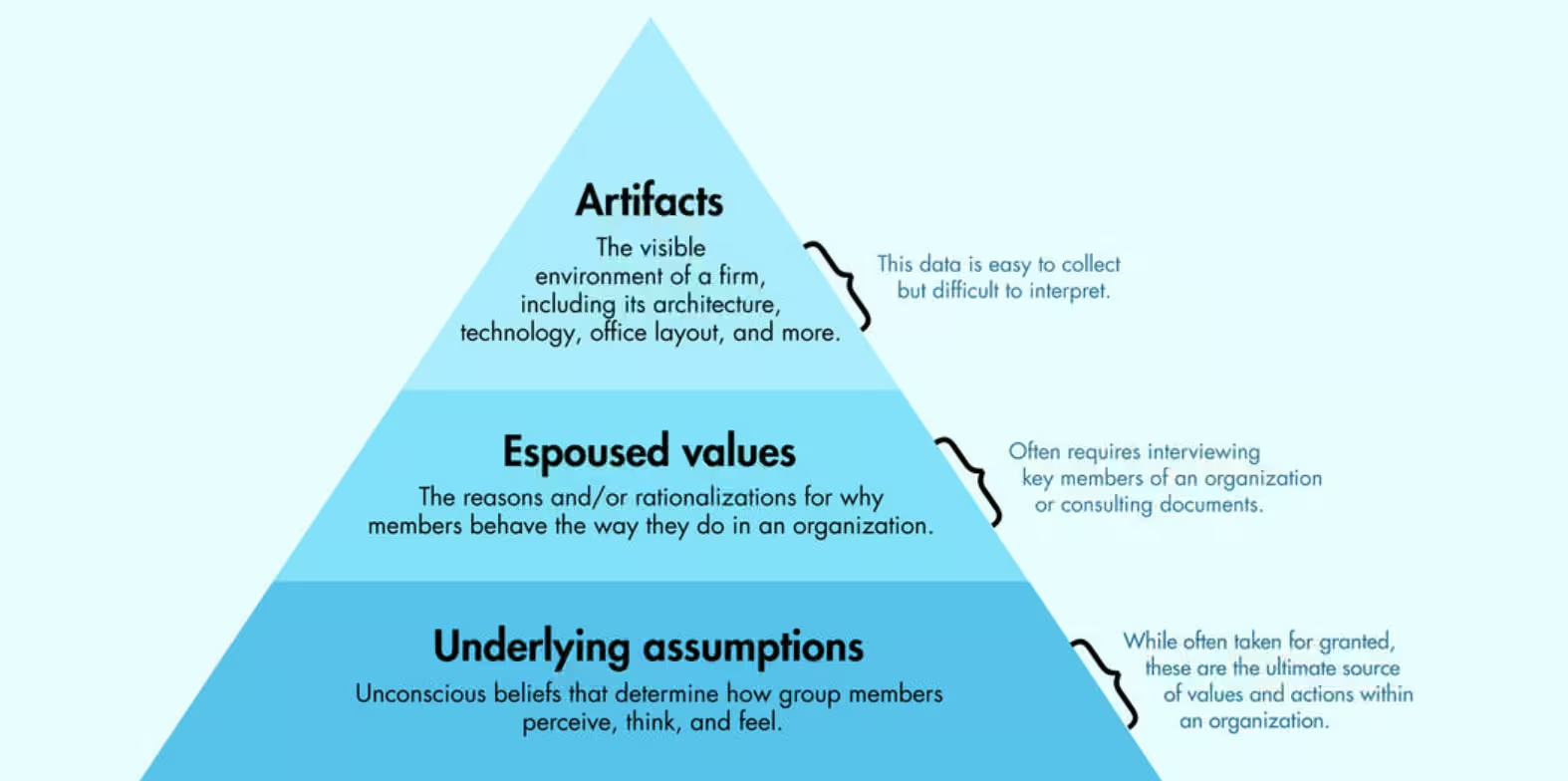
To better understand organizational culture, we use Edgar Schein’s culture model. This model helps break down the often elusive term ‘culture’ into three layers. From visible behavior to deep-seated beliefs.
1. Artifacts: what you see, hear, and feel
This is the top layer of culture. It’s about everything visible and tangible: office layout, dress code, how people interact, whether doors are open or closed. Processes, rituals, and symbols fall under this too. It’s the exterior of culture. Easy to observe, but tricky to interpret without context.
2. Espoused values: what we say is important
The second layer consists of the values, norms, strategies, and goals an organization promotes. Think of the mission and vision, core values, and codes of conduct. This layer tells us how the organization sees itself and how it wants employees to behave. But watch out: what’s said here doesn’t always match what actually happens.
3. Basic assumptions: what we take for granted
The deepest layer is often unconscious. It’s about beliefs and assumptions that are so taken for granted that they’re rarely spoken aloud. They form the foundation of the culture and guide behavior in a subtle way. This is where the unwritten rules live—the ‘truths’ everyone knows but no one writes down.
Schein emphasizes that a healthy organizational culture emerges when these three layers are connected. What you believe (basic assumptions) is reflected in what you say (values and vision), and is ultimately seen in what you do (artifacts and behavior). If those layers don’t align, you get friction, and as a change agent, you’ll notice that immediately.
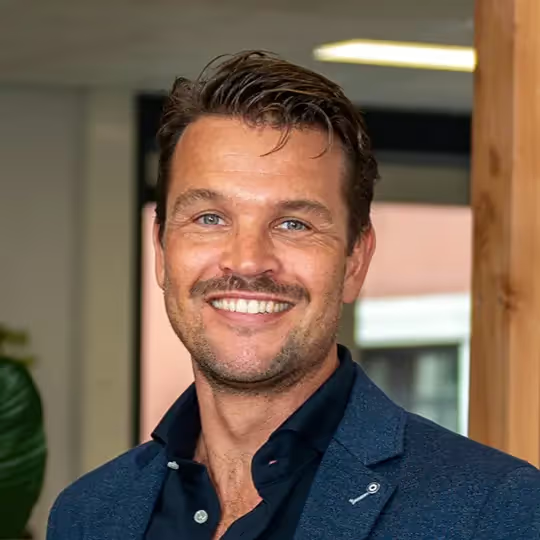
In conversation with Julian, founder of September
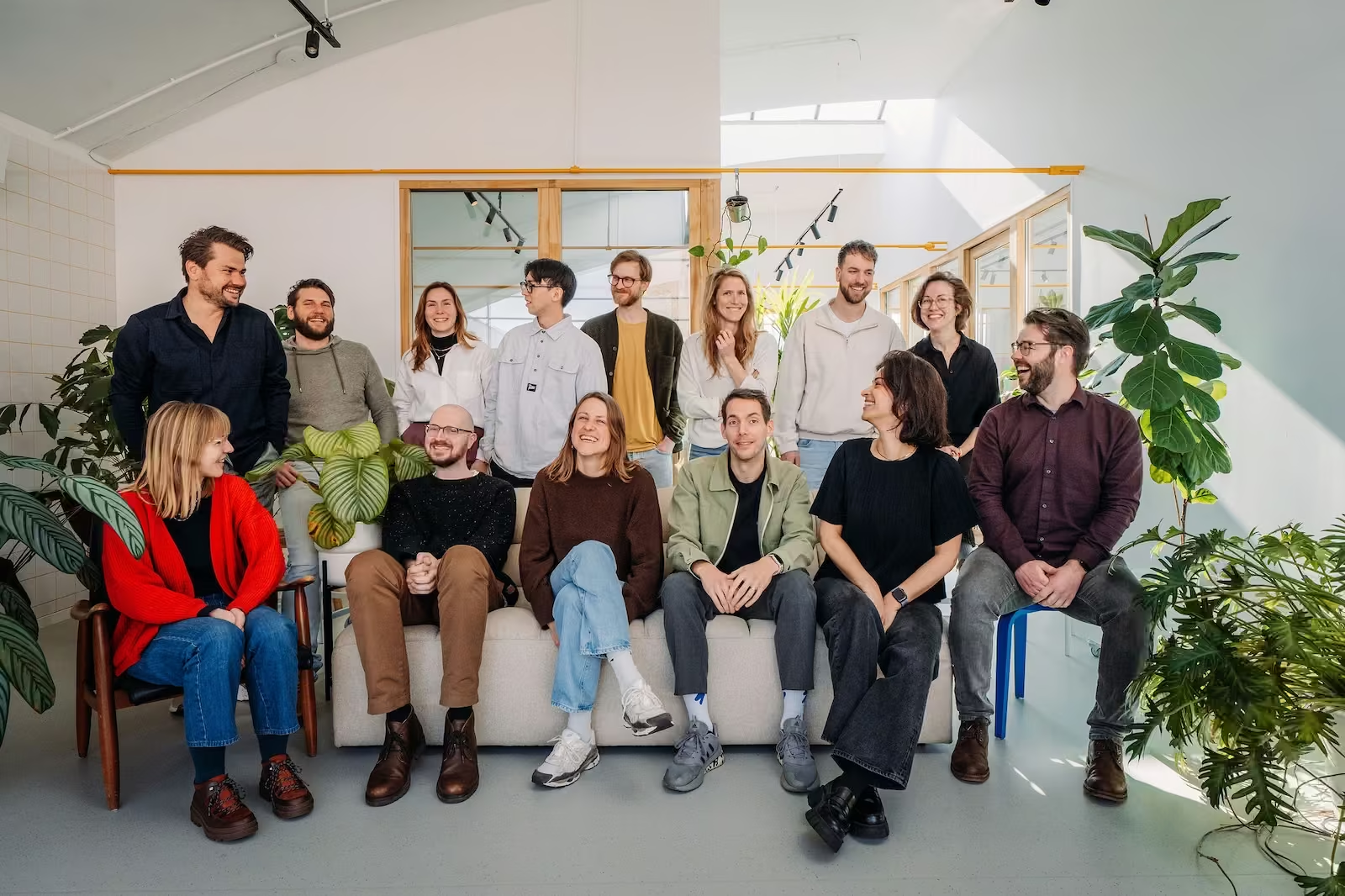
September: walk the talk—that’s Julian to a T. He’s the co-founder of September, a digital partner for meaningful brands based in Utrecht. For over 13 years, he, Daan, and Jan-Maarten have been building an organization that isn’t about maximizing profit or rapid growth, but about working in a way that feels true to who they are.
1) The start of your culture; from freedom to meaning
Julian: “We started in our early twenties, no boss, just friends. Freedom and fun were the main drivers: a fridge full of beer, few rules, Friday drinks. We soon started making choices that said a lot about who we wanted to be. For example, we arranged generous paternity leave before it was legally required—not because anyone asked for it, but because it felt logical and human.
As we got older and had kids, we looked at impact differently. If what I value in my private life isn’t reflected at work, I’ll be unhappy, even with a good salary. Freedom took on a deeper meaning: how do you treat each other, clients, and the world? Those personal values had to become visible in our choices.”
2) The turning point: “Go greener, or I’m out”
Julian: “After COVID, our commercial projects dried up. The team said: this is the moment; we go green, or we’re history. We joined Fossil Free Agencies, said no to fossil fuel clients (even when it was tempting financially), and made our choices visible. Not as a marketing stunt, but as consistent behavior aligned with what we believe.”
3) What you see when you walk in
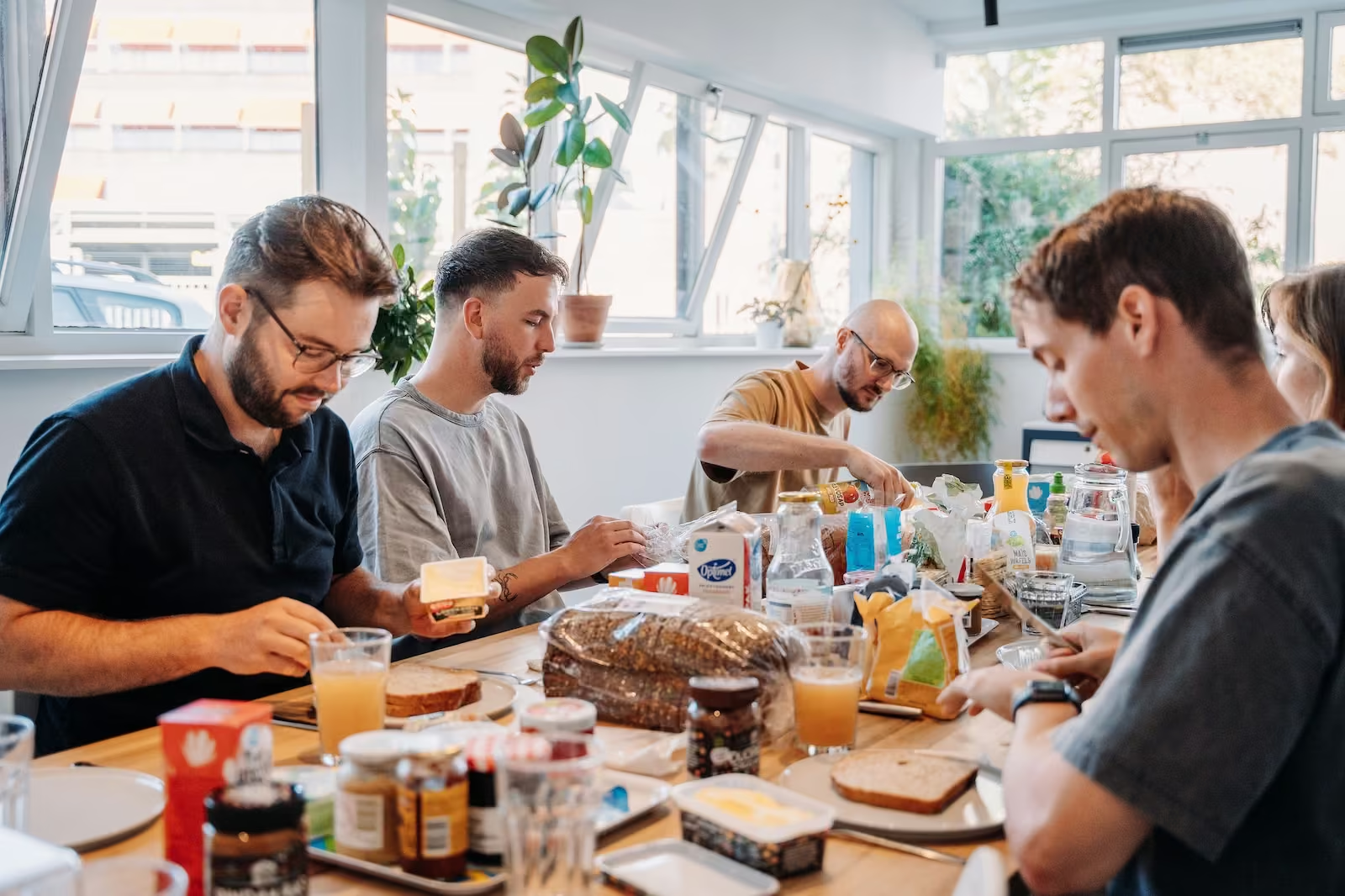
Julian: ''In practical terms, you’ll see an A++ studio with about 350 plants, vegetarian lunches, team trips by train, and a sustainability team that shares a tip or action every week. Those visible choices are expressions of what matters—not just random ‘fun stuff,’ but consistent behavior that shows who we want to be.''

4) Boundaries and red flags when culture is under pressure
Julian: “Our hard boundaries? No evening work and immediate intervention when clients push too hard: protecting the team comes first.
Early warning signs that the culture is under pressure include dissatisfaction, rising workloads, or informal freedoms becoming blurred. That’s when we make the conversation explicit and recalibrate our choices, so that our values, words, and actions align again.”
5) Why 300 applicants for two job openings?
Julian: ''Candidates are drawn to our values, the chance to do sustainable work for meaningful brands, and the daily proof of that: from lunch to travel. People consciously choose both the place and the principles.
The flip side? Our ‘soft’ culture isn’t for everyone. If you live for targets and competition, you won’t find much to hold onto here. And that’s a good thing: retention depends on those values remaining tangible. If the workload or the context compromises that, people leave faster.”
When behavior no longer matches what we say
What stands out at September is how consistently behavior, choices, and beliefs align. That’s exactly why you can feel the culture. Not in policies or core values, but in the daily details. Things start to grate when words no longer match what’s actually happening or the choices being made.
And you can tell. In decisions that are suddenly made outside of meetings (not so democratic after all, right?). In jokes that are a little too often about workload or company policy. In people who suddenly start saying “they” instead of “we”.
These aren't just incidents; they’re red flags. Signs that policy and conviction are out of sync. Because as soon as the pressure mounts, deep-seated beliefs will always beat a PowerPoint presentation.
My three key takeaways from my conversation with Julian? Here they are:
- Start by understanding, not by changing.
Listen to what people care about, what gives them energy, and what stresses them out. That tells you how they feel about change and, in turn, how the culture really works. Check if your values and reality are actually aligned.
- Not everyone is a fit for every culture
Sometimes the mismatch isn't in the plan, but in the underlying values of the organization. Talk about that openly instead of trying to force people into a mold that will never really fit.
- Tailor your change approach to the existing culture.
Once you know how the organization really ticks, align your processes, policies, and rhythms accordingly. Only then will change stick, because it resonates with the underlying current.
The wisdom of resistance
In my next blog, I’ll be diving into the power of resistance and chatting with Nadia Nengerman, Cognitive Behavioral Therapist at SeysCentra.


Frequently asked questions















.avif)







Fancy a chat?
Do you have a data, cloud or IT transformation challenge? We are happy to think along with you. Feel free to contact us.